ISRA FACTSHEETS
ISRA FACTSHEETS
EUROPEAN ATLANTIC
Moray Firth
Summary
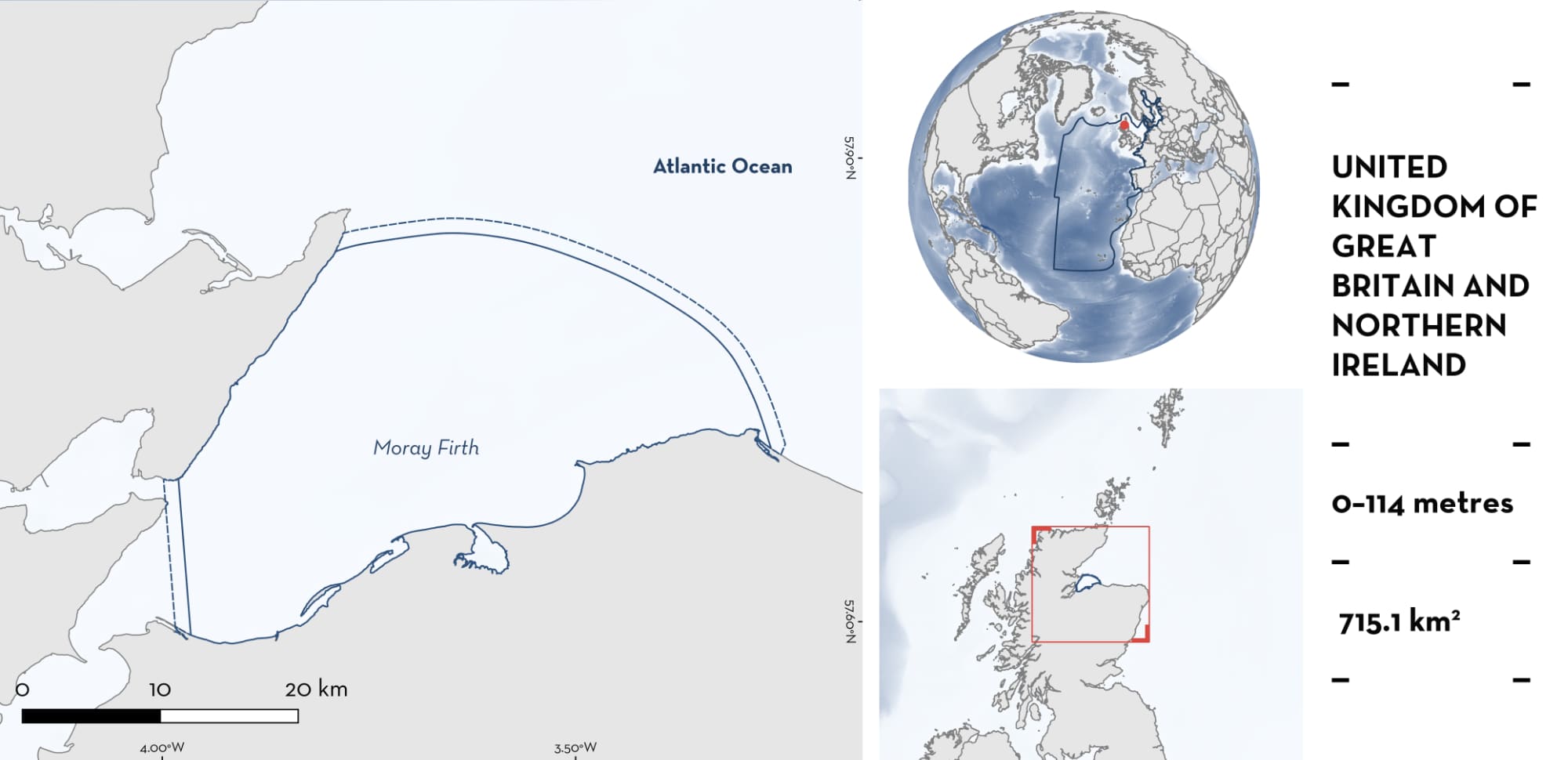
Moray Firth is located on the eastern coast of Scotland, United Kingdom of Great Britain and Northern Ireland. The area is within the largest narrow inlet or estuary (firth) in Scotland and is characterised by sandy and rocky substrates. It is influenced by the Scottish Coastal Current. Within this area there are: threatened species and undefined aggregations (Basking Shark Cetorhinus maximus).
Download factsheet
Moray Firth
DESCRIPTION OF HABITAT
Moray Firth is located in Scotland, United Kingdom of Great Britain and Northern Ireland. It is situated on the eastern coast, within the largest narrow inlet or estuary (firth) in Scotland. The area is characterised by sandy and rocky substrates (Moore & Wilson 2002).
The area is influenced by the Scottish Coastal Current (Inall et al. 2009), with the variation in phytoplankton being a driver of productivity in the area (Fehling et al. 2012), which increases alongside warm water plumes (Tetley et al. 2008).
This Important Shark and Ray Area is pelagic and is delineated from inshore and surface waters (0 m) to 114 m based on the bathymetry of the area.
CRITERION A
VULNERABILITY
One Qualifying Species considered threatened with extinction according to the IUCN Red List of Threatened Species regularly occurs in the area. This is the Endangered Basking Shark (Rigby et al. 2021).
CRITERION C
SUB-CRITERION C5 – UNDEFINED AGGREGATIONS
Moray Firth is an important area for undefined aggregations of one shark species.
Opportunistic land-based and vessel-based sightings reported by citizen scientists to the Shark Trust Basking Shark Project are collated into a dedicated database, with records since 1987 (Shark Trust unpubl. data. 2025). Observations of three or more individuals reported at one time were extracted, and duplicate records were removed. Between 2012–2020, a total of 619 Basking Sharks were observed from 55 aggregations (Shark Trust unpubl. data 2025). The mean number of aggregations per year in this period was 3, comprising an average of 11 individuals per aggregation (maximum = 41 individuals per aggregation). During this period, aggregations have been reported from this area in 2012 (1 aggregation; 5 individuals), 2013 (41 aggregations; 544 individuals), 2018 (2 aggregations; 10 individuals), 2019 (1 aggregation; 3 individuals), and 2020 (10 aggregations; 57 individuals). This location has one of the highest numbers of contemporary citizen science reports of Basking Shark aggregations in the United Kingdom of Great Britain and Northern Ireland and is the only known location with regular and predictable observations of Basking Shark aggregations on the eastern coast. This species may be aggregating for feeding purposes based on direct observations by citizen scientists of animals feeding at the surface (Shark Trust unpubl. data 2025) and the known plankton plumes within this area (Tetley et al. 2008). Further information is needed to understand the nature and function of these aggregations.
Download factsheet
SUBMIT A REQUEST
ISRA SPATIAL LAYER REQUEST
To make a request to download the ISRA Layer in either a GIS compatible Shapefile (.shp) or Google Earth compatible Keyhole Markup Language Zipped file (.kmz) please complete the following form. We will review your request and send the download details to you. We will endeavor to send you the requested files as soon as we can. However, please note that this is not an automated process, and before requests are responded to, they undergo internal review and authorization. As such, requests normally take 5–10 working days to process.
Should you have questions about the data or process, please do not hesitate to contact us.