ISRA FACTSHEETS
ISRA FACTSHEETS
EUROPEAN ATLANTIC
Formigas Islets
Summary
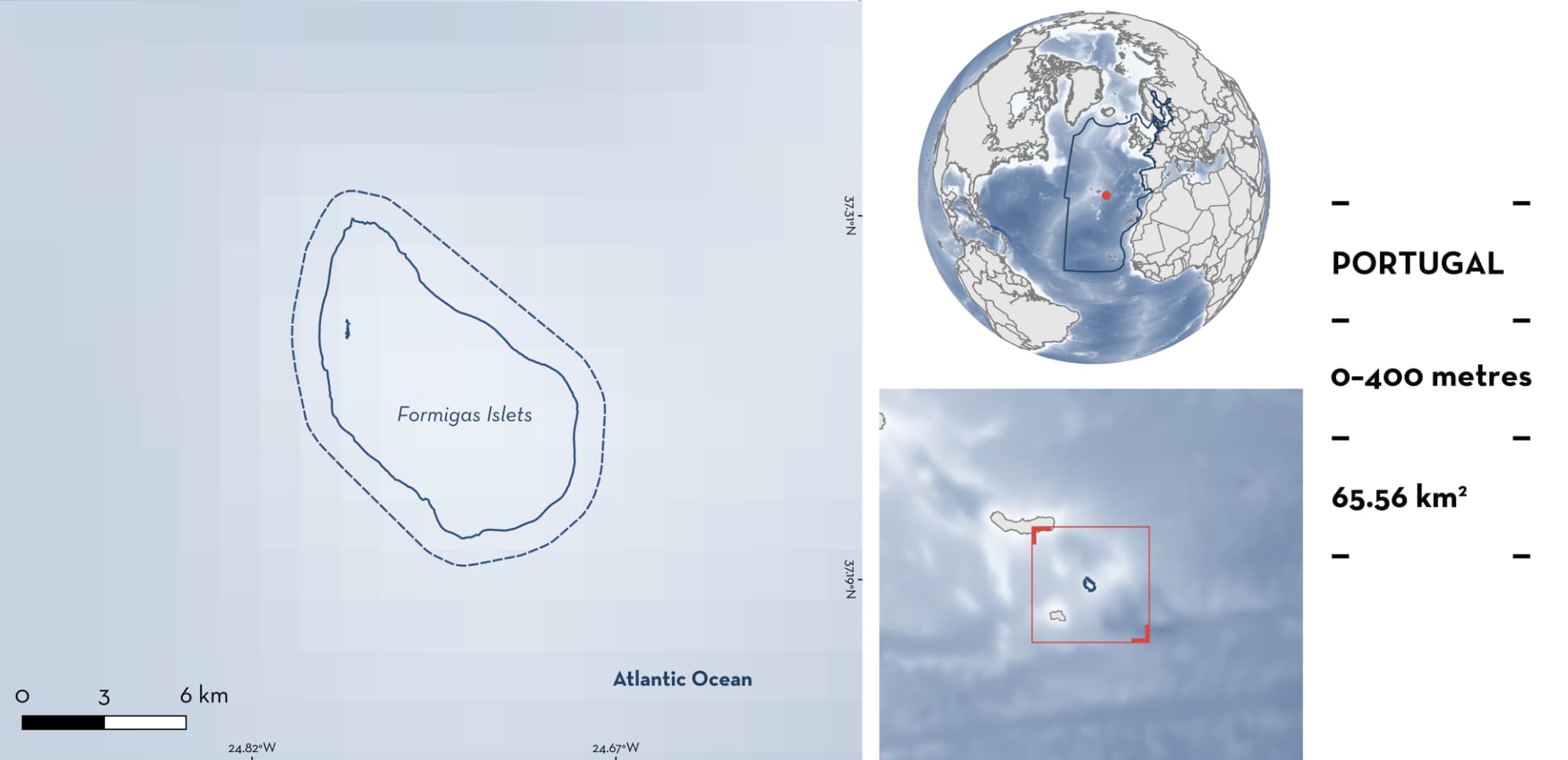
Formigas Islets is located in the southeastern Azores Archipelago. The area is situated ~40 km northeast of Santa María Island. The area is characterised by multiple outcrops and pinnacles with shallow rocky patches, algal covered substrates, and coral reefs. It overlaps with the Ilhéus das Formigas Nature Reserve. Within this area there are: threatened species and undefined aggregations (Sicklefin Devil Ray Mobula tarapacana).
Download factsheet
Formigas Islets
DESCRIPTION OF HABITAT
Formigas Islets is located in the southeastern Azores Archipelago, an autonomous region of Portugal. It is situated ~40 km northeast of Santa María Island. The area is characterised by multiple outcrops and pinnacles with shallow habitats with rocky substrates, algal covered substrates, and coral reefs (e.g., Dollabarat Reef; EEA 2025).
The area has temperate conditions as a result of the confluence of the North Atlantic Current and the Azores Current and is highly influenced by strong currents. Sea surface temperatures are lower in the boreal winter (~14–15°C) and higher in summer (~23–24°C), with chlorophyll-a concentrations being highest (~0.43 mg m-3) in winter and spring (Narciso et al. 2016; Amorim et al. 2017).
The area overlaps with the Ilhéus das Formigas Nature Reserve (UNEP-WCMC & IUCN 2025).
This Important Shark and Ray Area is pelagic and is delineated from surface waters (0 m) to 400 m based on the bathymetry of the area.
CRITERION A
VULNERABILITY
One Qualifying Species considered threatened with extinction according to the IUCN Red List of Threatened Species regularly occurs in the area. This is the Endangered Sicklefin Devil Ray (Marshall et al. 2022).
CRITERION C
SUB-CRITERION C5 – UNDEFINED AGGREGATIONS
Formigas Islets is important for undefined aggregations of one ray species.
Underwater visual census (UVC) surveys conducted between 2000–2023 in the area revealed regular Sicklefin Devil Ray aggregations (Sobral 2013; B Macena et al. unpubl. data 2025). Surveys consisted of belt transects (1–7 transects per dive, 50 m length and 5 m width) and were undertaken across multiple islands and seamounts around the Azores Archipelago (B Macena et al. unpubl. data 2025). Of 78 dives conducted between 1997–2011 within the area, 16.7% (n = 13) recorded aggregations of Sicklefin Devil Rays (Sobral 2013). After 2011, aggregations were recorded regularly each month and were composed of 4–60 individuals (average = 5 individuals). These aggregations were observed exclusively in the summer between June–September. The Azores are recognized as a hotspot for aggregations of the species during this period which have become the focus of recreational diving activities (Sobral 2013; Afonso et al. 2020; B Macena et al. unpubl. data 2025). Formigas Islets ranks third in terms of aggregations of Sicklefin Devil Rays in the archipelago after Princess Alice Bank (~450 km from Formigas Islets) and Ambrósio Seamount (~50 km from Formigas Islets; Sobral 2013). Additional information is required to understand the nature and function of these aggregations.
Download factsheet
SUBMIT A REQUEST
ISRA SPATIAL LAYER REQUEST
To make a request to download the ISRA Layer in either a GIS compatible Shapefile (.shp) or Google Earth compatible Keyhole Markup Language Zipped file (.kmz) please complete the following form. We will review your request and send the download details to you. We will endeavor to send you the requested files as soon as we can. However, please note that this is not an automated process, and before requests are responded to, they undergo internal review and authorization. As such, requests normally take 5–10 working days to process.
Should you have questions about the data or process, please do not hesitate to contact us.