ISRA FACTSHEETS
ISRA FACTSHEETS
CENTRAL AND SOUTH AMERICAN PACIFIC REGION
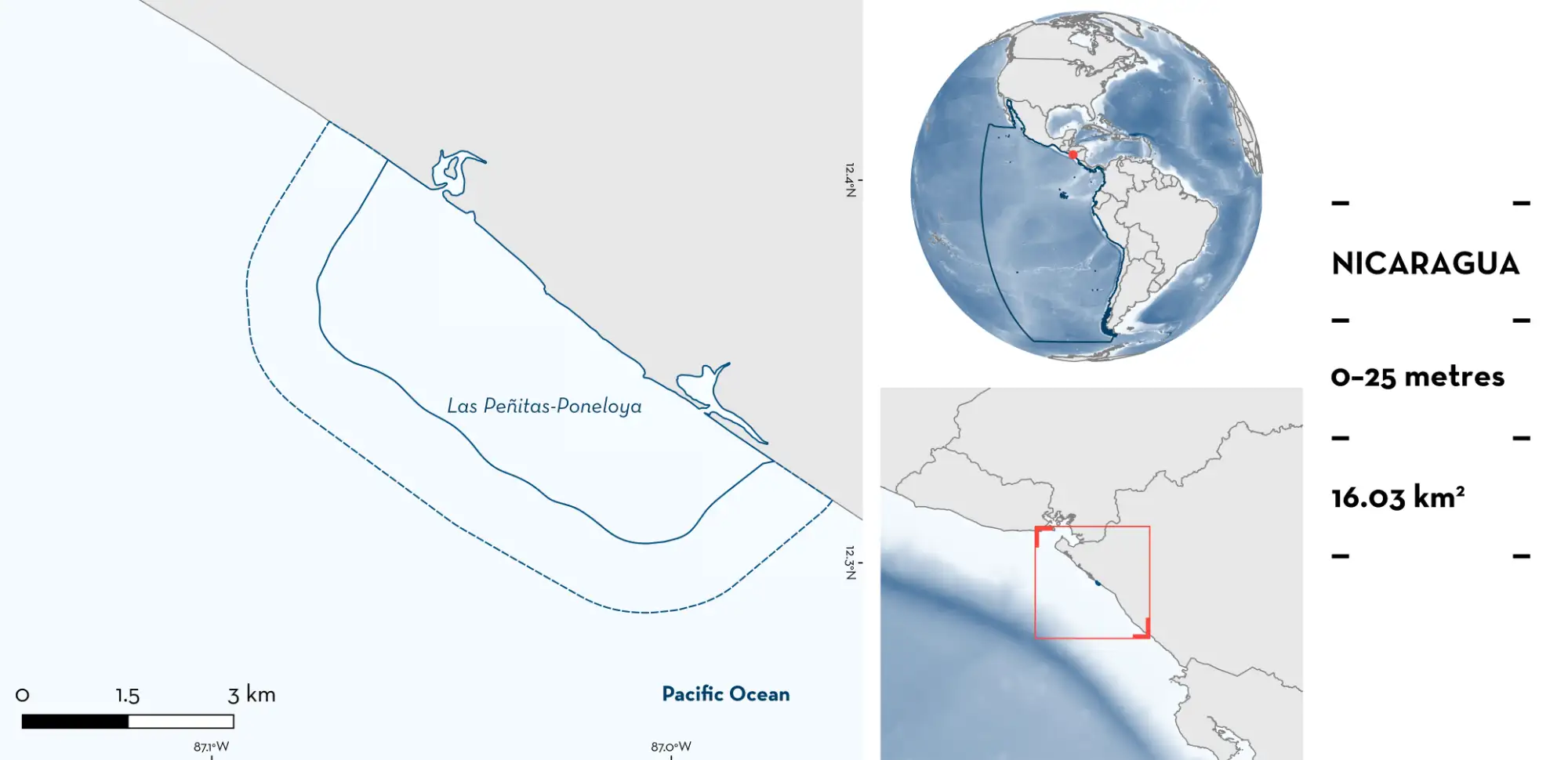
Las Peñitas and Poneloya
Summary
Las Peñitas and Poneloya is located on the Pacific coast of Nicaragua. The area is characterised by sandy beaches, mangrove forests, and river mouths. It is influenced by freshwater inflow from estuaries. Within this area there are: threatened species and reproductive areas (Scalloped Hammerhead Sphyrna lewini).
Download factsheet
Las Peñitas and Poneloya
DESCRIPTION OF HABITAT
Las Peñitas and Poneloya is located on the Pacific coast of Nicaragua in the León Department. The area is characterised by a diversity of habitats that include sandy beaches, mangrove forests, estuaries, and river mouths. The estuarine systems and areas between flooded shores, dry shores, open areas, and branches of the main estuary form a rich and productive environment (Vallarta-Zárate et al. 2021). It is also influenced by a rainy season from the middle of May to the middle of November (International Living 2013).
This Important Shark and Ray Area is delineated from inshore and surface waters (0 m) to a depth of 25 m based on the maximum depth range of the habitat used by the Qualifying Species.
CRITERION A
VULNERABILITY
One Qualifying Species considered threatened with extinction according to the IUCN Red List of Threatened Species regularly occurs in this area. This is the Critically Endangered Scalloped Hammerhead (Rigby et al. 2019).
CRITERION C
SUB-CRITERION C1 – REPRODUCTIVE AREAS
Las Peñitas and Poneloya is an important reproductive area for one shark species.
Scalloped Hammerheads are regularly observed by local artisanal fishers. This is the most abundant shark species caught and landed within the area, according to surveys of artisanal fisheries landing sites. Between May and July 2021, 146 immature Scalloped Hammerheads (measuring 31–66 cm total length [TL]) were recorded from a landings survey (Hernandez-Fernandez et al. 2021). The size-at-birth of this species is 31–57 cm TL (Ebert et al. 2021). Neonate and young-of-the-year (YOY) Scalloped Hammerheads measure between 45–160 cm TL in the Eastern Pacific (Bejarno Álvarez 2007). The records of neonate/YOY Scalloped Hammerheads in this region coincide with the onset of the rainy season, resulting in high discharge of nutrients from rivers in this area, thus providing advantageous conditions for early life stages (Hearn et al. 2010; López-Garro & Zanella 2015). Also, this timeframe correlates with the time of maximum fecundity of the species (Campuzano 2002), and when females give birth within this region (Alejo-Plata 2007). Local Ecological Knowledge confirms that these observations are recorded across multiple years (Hernandez-Fernandez pers. obs. 2022).
Download factsheet
SUBMIT A REQUEST
ISRA SPATIAL LAYER REQUEST
To make a request to download the ISRA Layer in either a GIS compatible Shapefile (.shp) or Google Earth compatible Keyhole Markup Language Zipped file (.kmz) please complete the following form. We will review your request and send the download details to you. We will endeavor to send you the requested files as soon as we can. However, please note that this is not an automated process, and before requests are responded to, they undergo internal review and authorization. As such, requests normally take 5–10 working days to process.
Should you have questions about the data or process, please do not hesitate to contact us.