ISRA FACTSHEETS
ISRA FACTSHEETS
EUROPEAN ATLANTIC
Radazul
Summary
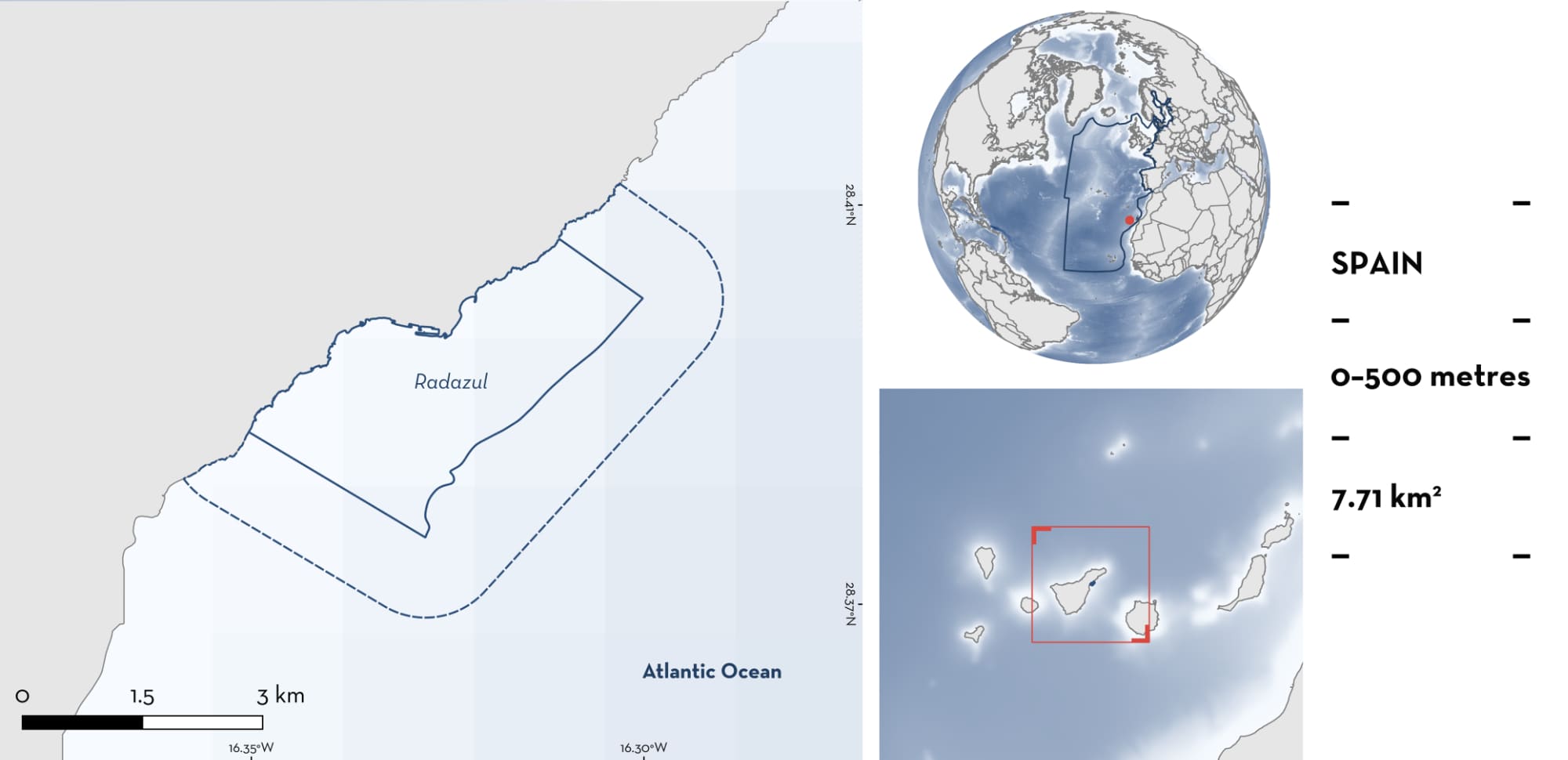
Radazul is located on the eastern coast of Tenerife Island, Canary Islands, Spain. The area is characterised by a steep slope, with volcanic black sand and cobble substrates. It is influenced by the Canary Current and the coastal upwelling system off northwest Africa, which promotes elevated primary productivity. The area overlaps with the Oceanic Islands and Seamounts of the Canary Region Ecologically or Biologically Significant Marine Area. Within this area there are: threatened species (e.g., White Skate Rostroraja alba) and the area sustains a high diversity of Qualifying Species (13 species).
Download factsheet
Radazul
DESCRIPTION OF HABITAT
Radazul is located on the eastern coast of Tenerife Island, Canary Islands, Spain. The area is characterised by a steep slope, with volcanic black sand and cobble substrates (Lozano et al. 2003).
The area is influenced by the Canary Current and the coastal upwelling system off northwest Africa, which inject cold, nutrient-rich waters seasonally, promoting elevated primary productivity, creating nutrient-rich filaments and cyclonic eddies, especially from the boreal spring to autumn (Sandulescu et al. 2008; Gómez-Letona et al. 2017).
This area overlaps with the Oceanic Islands and Seamounts of the Canary Region Ecologically or Biologically Significant Marine Area (EBSA; CBD 2025).
This Important Shark and Ray Area is benthic and pelagic and is delineated from inshore and surface waters (0 m) to 500 m based on the bathymetry of the area.
CRITERION A
VULNERABILITY
Thirteen Qualifying Species considered threatened with extinction according to the IUCN Red List of Threatened Species regularly occur in the area. Threatened sharks comprise two Critically Endangered species and one Endangered species; threatened rays comprise two Critically Endangered species, four Endangered species, and four Vulnerable species (IUCN 2025).
CRITERION D
SUB-CRITERION D2 – DIVERSITY
Radazul sustains a high diversity of Qualifying Species (13 species). This meets the regional diversity threshold (13 species) for the European Atlantic region. The regular presence of Qualifying Species was documented between 2010–2025 by frequent observations in diving operations and visual census surveys conducted by scientists with a research submarine (A Rodríguez-Juncá unpubl. data 2025; Angel Shark Project unpubl. data 2025; Condrik unpubl. data 2025; Pisces VI Submarine unpubl. data 2025), and through citizen science while scuba or free diving supported by photographic evidence (Espino et al. 2022; iNaturalist 2025; RedPROMAR Gobierno de Canarias 2025). Due to the area’s accessibility for shore-based diving, citizen scientist reports are numerous for most species (RedPROMAR Gobierno de Canarias 2025). However, sharks and rays that inhabit deeper waters, such as Longnosed Skate and Tope, have only been observed during submarine dives, resulting in fewer sightings due to lower survey effort at those depths (Pisces VI Submarine unpubl. data 2025). Brown Stingray was mainly observed during night dives in the area, therefore fewer sightings were also reported for this species (RedPROMAR Gobierno de Canarias 2025). All Qualifying Species were recorded over a period of at least two years between 2010–2025.
Download factsheet
SUBMIT A REQUEST
ISRA SPATIAL LAYER REQUEST
To make a request to download the ISRA Layer in either a GIS compatible Shapefile (.shp) or Google Earth compatible Keyhole Markup Language Zipped file (.kmz) please complete the following form. We will review your request and send the download details to you. We will endeavor to send you the requested files as soon as we can. However, please note that this is not an automated process, and before requests are responded to, they undergo internal review and authorization. As such, requests normally take 5–10 working days to process.
Should you have questions about the data or process, please do not hesitate to contact us.